
Describe the system. Review the design.
Klemma is a browser-based electrical engineering platform for machine and panel builders. Tell the agent what you need; it proposes a schematic, a bill of materials and a pin-to-pin wiring table as a change you can inspect, accept or reject. Once accepted, the same data produces your production files.
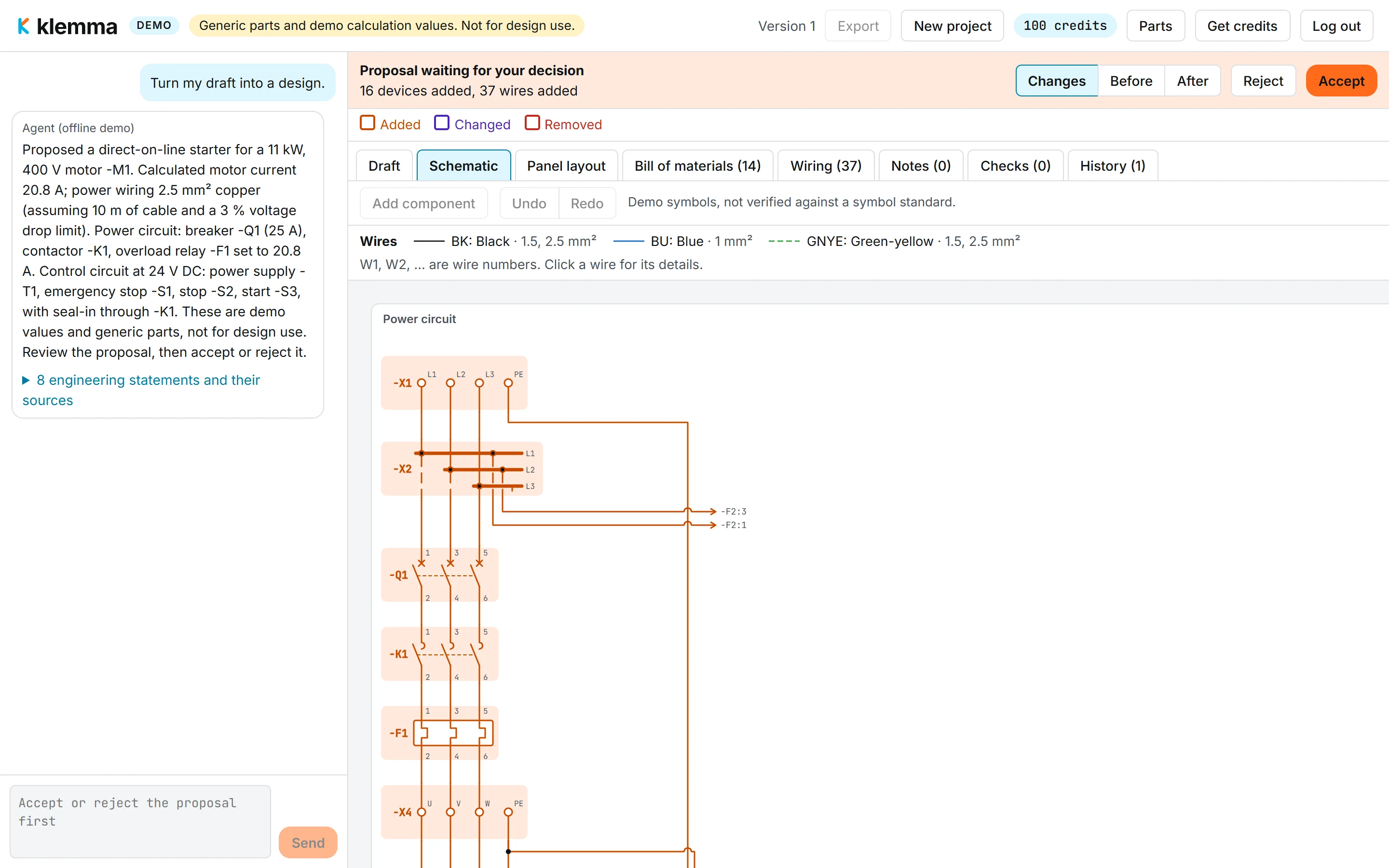
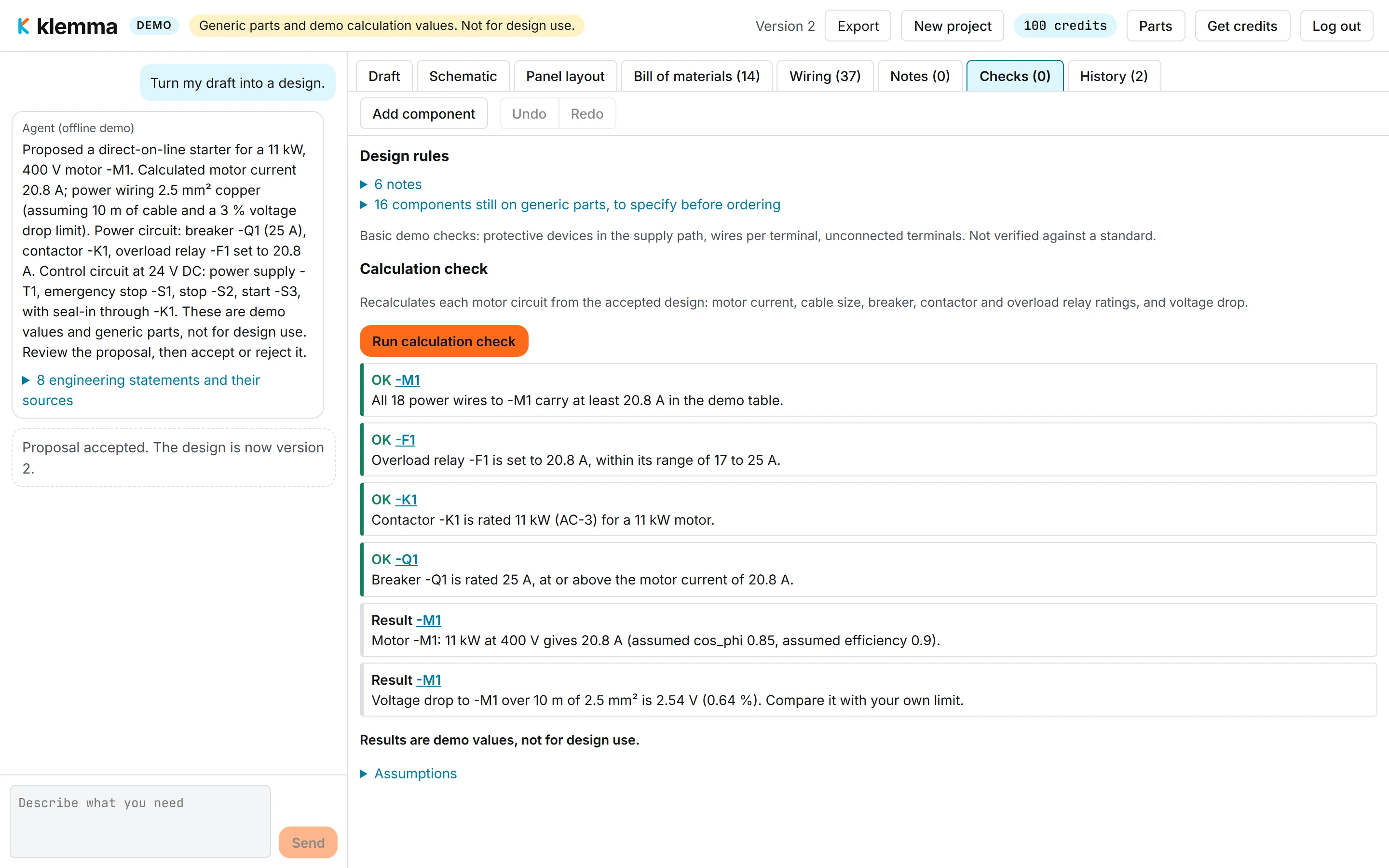
The agent's proposal for an 11 kW motor starter, made from a sketch of the system and waiting for review. Everything it adds is marked; nothing changes until you accept.
The idea
The model is the product
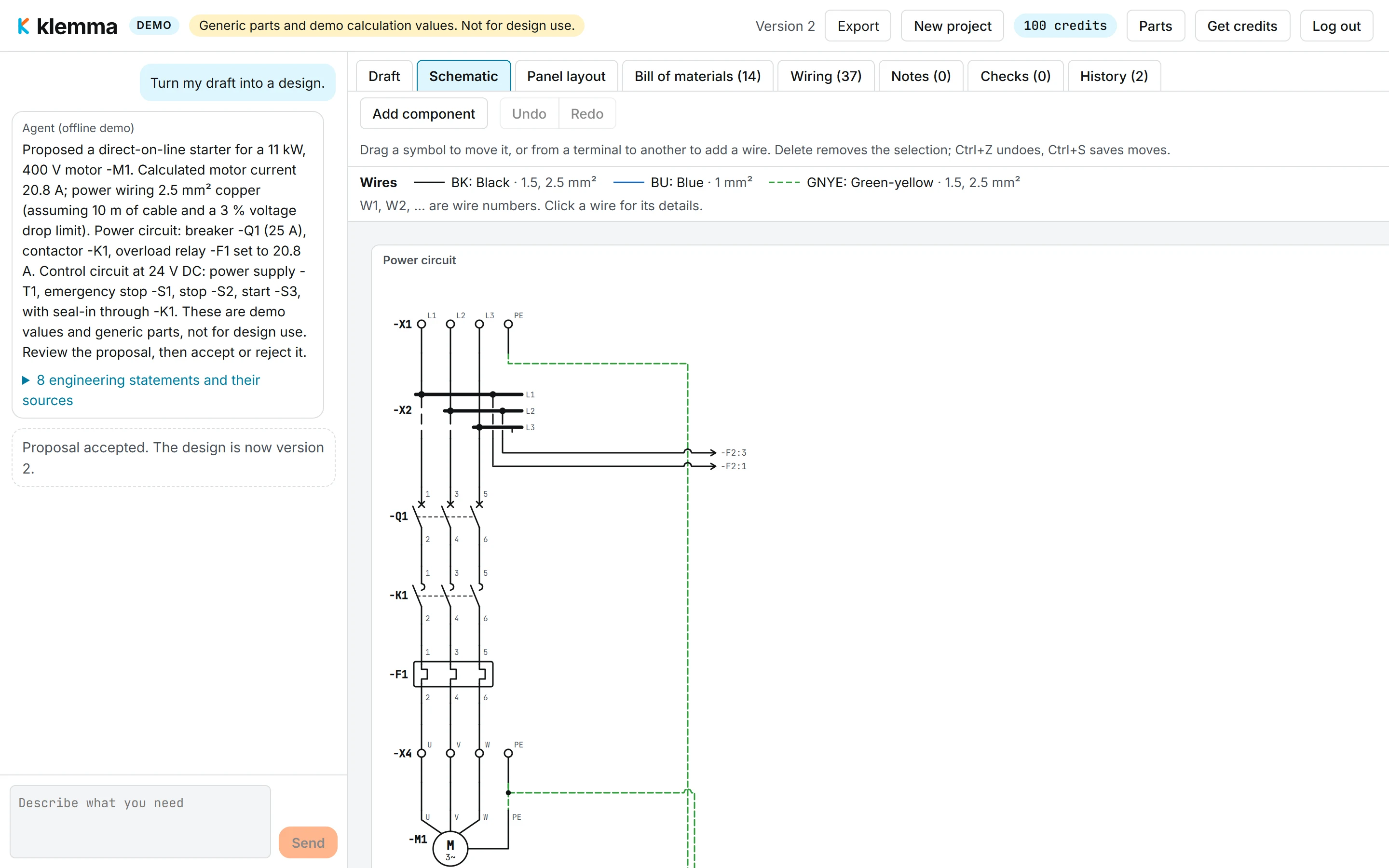
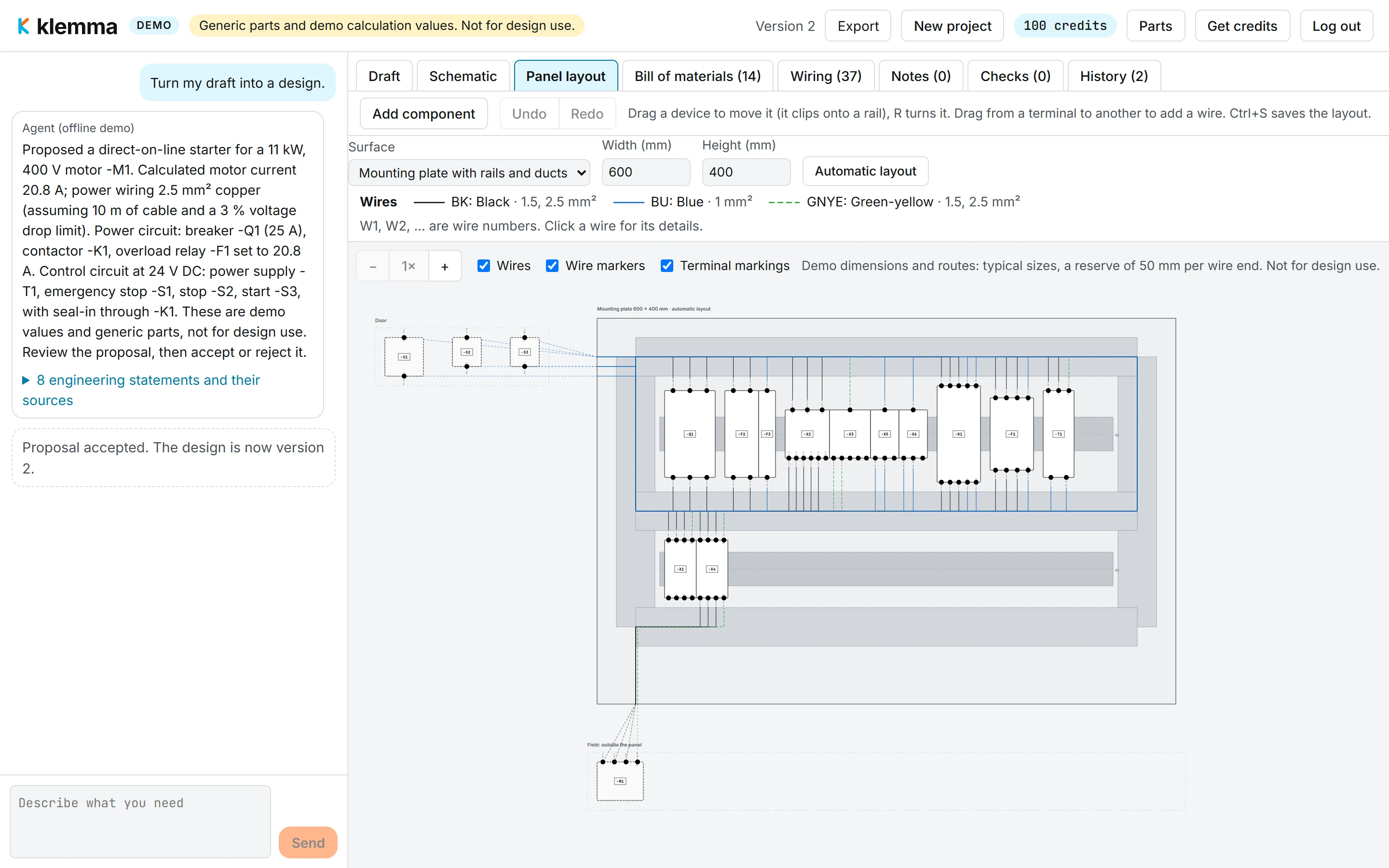
Devices, terminals and connections are stored as data. Drawings, parts lists, wiring tables and production files are views of it, so they never disagree.
Every change is a proposal
The agent never edits silently. You see a before and after diff and decide. Every change is in the history and can be restored.
Calculations are not guessed
Sizing is done by deterministic code, not by the language model, and every engineering claim names its source or says it is not verified.
Klemma and a traditional ECAD tool
| Traditional ECAD | Klemma | |
|---|---|---|
| Learning it | Formal training before you are productive: menus, macros and project structures to learn first. | No course first. Describe what you need in plain language and review what the agent proposes. |
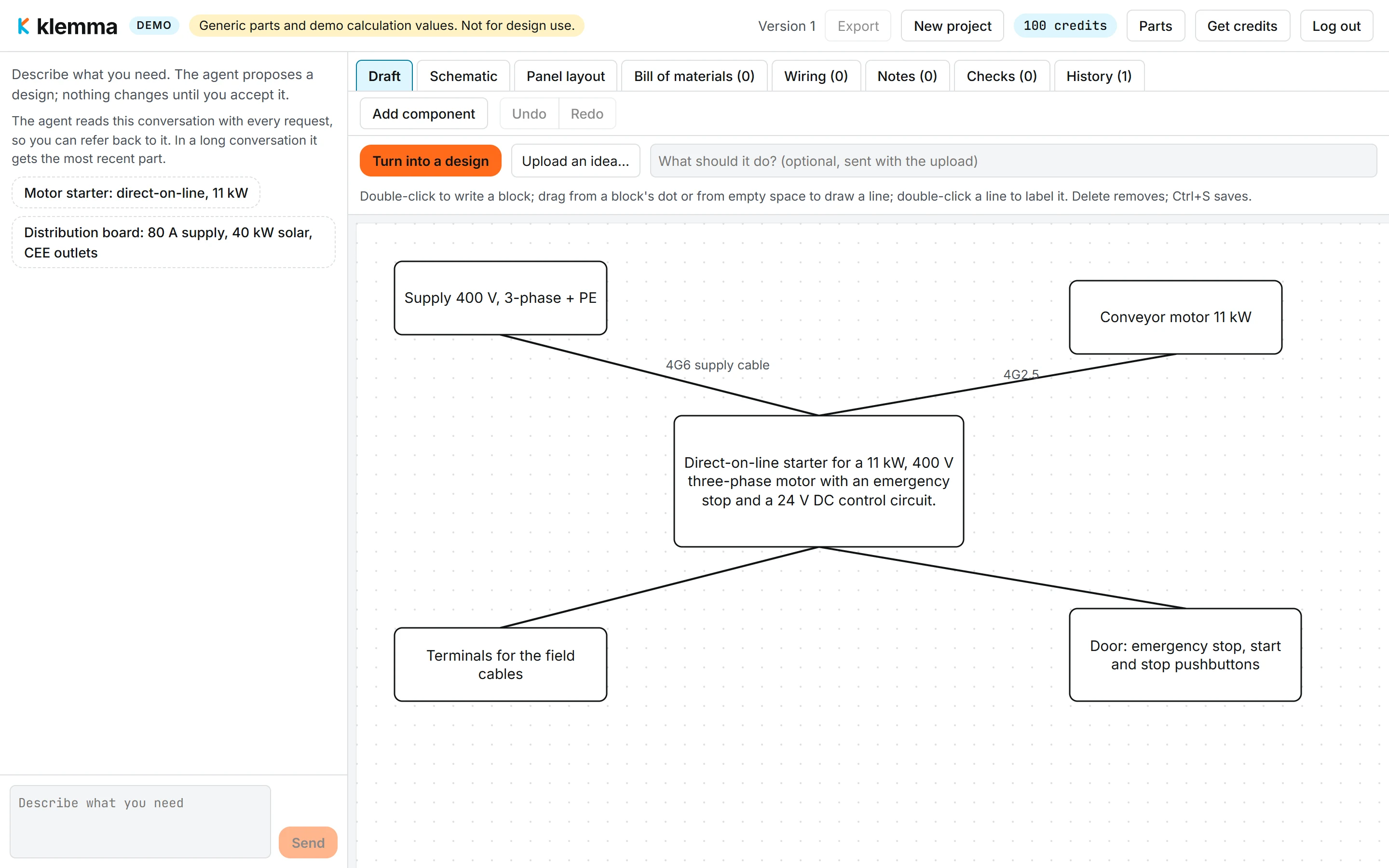
| Starting a project | Page structures, macros and master data to set up before the first drawing. | Sketch the system or describe it; the agent proposes a first design in minutes. |
| Paying for it | A large licence up front, often per seat and per module. | Start free with 100 credits, then a monthly plan from € 199, excl. VAT. No upfront licence. Pricing |
A general comparison with desktop ECAD packages; training, setup and prices differ per vendor.
From request to production files
Who it is for
Electrical engineers at small machine builders and panel builders working to IEC standards.
Where we are
This is an early demo with generic parts and demo values. See the roadmap for where Klemma is going.